On July 9, 2025, Seattle started a new chapter for public safety when Chief Shon F. Barnes was sworn in as the city’s 38th police chief before a crowd of more than 200 police officers, elected officials, and community members. Held at Seattle’s Northwest African American Museum, the ceremony was more than a formality – it was a statement of intent.
“I am here to lead. I am here to listen. And I am here to ensure that you have the support, resources, and training necessary to succeed in your roles and to return home safely at the end of each shift,” Barnes told the more the audience, which included current and former police chiefs from around the country, elected officials, community members, as well as leaders of the National Organization of Black Law Enforcement Executives.
To community members and members of the business community ranging from small businesses to corporations, he said, “As I accept this role I do so with a deep respect and a profound appreciation for this city’s rich history and vibrant culture, and an unwavering commitment to our shared mission: keeping Seattle safe through collective efforts.”
While he has been serving as interim chief since January, with the swearing in, Barnes officially takes the helm of SPD following a unanimous 9-0 City Council confirmation on July 1. His appointment comes at a critical juncture for SPD, which is rebuilding after years of challenges, including leadership turnover, federal oversight, a staffing shortage, and community tensions following the 2020 protests.
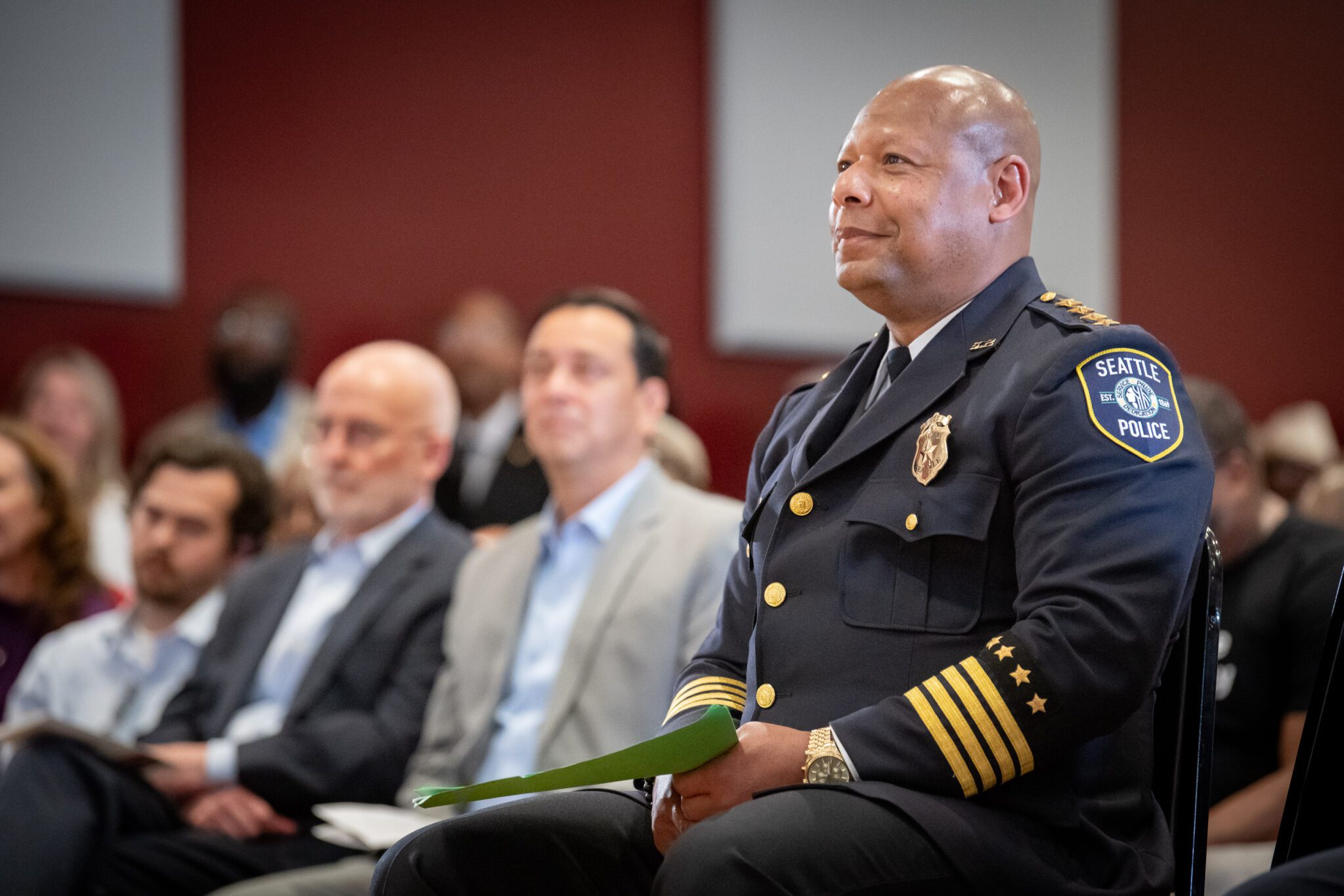
Mayor Bruce Harrell, who nominated Barnes, praised his leadership during the interim period.
“Chief Shon Barnes embodies the qualities of leadership, empathy, and innovation that are essential to steering Seattle’s Police Department into a future that prioritizes public safety and community trust,” Harrell said.
“His impressive track record in community-based policing and his dedication to evidence-based practices will make him effective as our next permanent police chief. Together, Chief Barnes and I envision a Seattle-centric approach to policing, one that not only reduces crime but also enhances the quality of life for all residents. We are committed to creating a police department that is well-staffed, well-trained, and deeply integrated into the fabric of our community. I am confident that under Chief Barnes’ guidance, we will continue to build a safer, more inclusive Seattle that truly reflects the values and aspirations of its residents.”
An advocate of community policing, Barnes has made community connections his top priority. He has held meetings with residents, neighborhood groups, activists, skeptics, and city officials, listening, answering tough questions, and building trust.
I promise to lead with urgency, empathy, and courage. Together, we will set a new standard for what public service looks like rooted in selfless public service, innovation, and an unwavering commitment to love, or what legal experts refer to as justice.
-Chief Shon Barnes
Let us not shy away from what lies ahead. Let us acknowledge our challenges while uplifting the many things this department and city already does well.
Together, we will build a department that is not only effective, but also a national model for exceptional policing, rooted in trust, collaboration, and transparency.
I chose Seattle because I believe in it. I believe in its people, its possibilities, and its pursuit of progress.
And I believe in the officers and professional staff of this department. I know we can achieve great things together.
At the same time, he’s been tackling departmental challenges such as officer recruitment. As of July 9, the Seattle Police Department this year has hired 94 new recruits, representing a step toward stabilizing and strengthening the force. During the same period, crime in Seattle has fallen 9%, signaling early momentum for Barnes’s hands-on, community-focused approach
Barnes brings experience from his previous role as police chief in Madison, WI, where he earned national recognition for his work in crime reduction, community-police relations, and cultural change within law enforcement. A believer in communication, he emphasizes transparency, accountability, and partnership with the communities SPD serves.
The ceremony was held at Seattle’s Northwest African American Museum as a reflection of his embrace of not just his own cultural background but a symbolic outreach to all of Seattle’s ethnic communities.
That outreach was emphasized by the inclusion of Dolls & Gents, the Seattle drill team and drumline that provides a positive outlet for youth specific to African American communities across the country.
Chief Barnes’ commitment to justice extends to a lifetime dedication to social justice.
In the summer of 2020, he was among three police leaders – along with Chief Tarrick McGuire of Alexandria, VA and Dr. Obed Magny – who retraced the steps of the historic 54-mile civil rights march from Selma to Montgomery, Alabama. The resulting documentary film, The 54th Mile Policing Project, is both an exploration of what it means to be a Black man and a law enforcement leader and also a call for collective action to enhance police relationships with communities of color across the country.
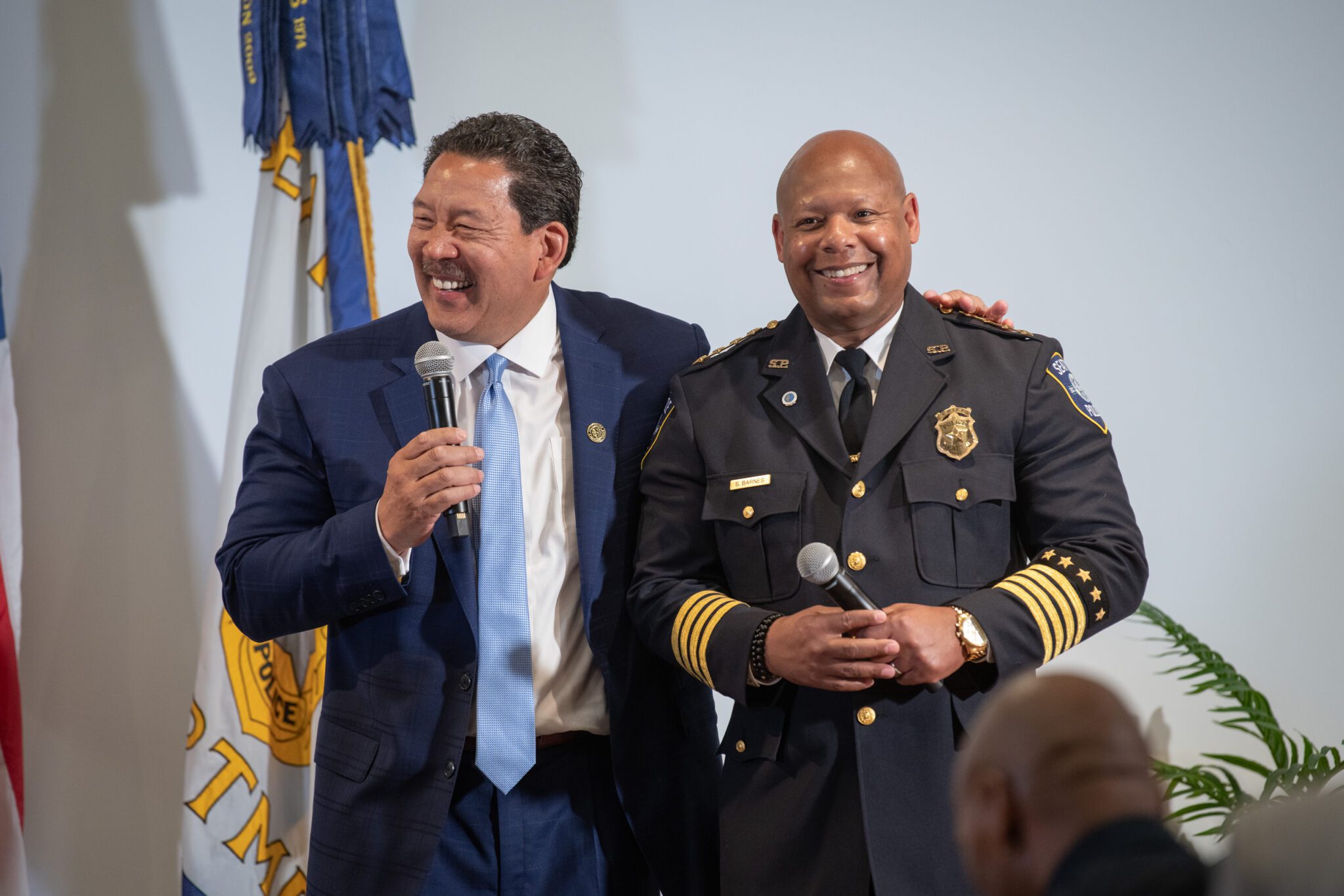
“In his first six months, Chief Barnes has clearly shown he has the right temperament, experience, and vision to lead the Seattle Police Department during this time of transition,” said Councilmember Bob Kettle (District 7), who also chairs the Public Safety Committee. “I’m hopeful he’ll continue to build on this momentum by connecting with Seattle’s diverse communities and continuing to build trust. It’s vital that we all keep working together to make this city a safe and welcoming place.”
In his swearing-in speech, Barnes spoke to all officers, community members in attendance.
To officers, he acknowledged the courage and sacrifice of every SPD officer.
“I know the courage it takes to put on this uniform every single day. I’m here to make sure you have what you need to serve and retire safely,” he said. He pledged that his executive team will model integrity, respect, and accountability, calling them “my foundational principles.”
Barnes also highlighted the importance of collective action and community collaboration in public safety. He reaffirmed his commitment to supporting vulnerable populations, including renters, people experiencing homelessness, and those affected by substance abuse. “Public safety is a shared responsibility,” he said. “We must be close enough to offer compassion, support, and respect to everyone in our city.”
Looking ahead, Barnes plans to continue engaging residents through neighborhood public safety walks and community forums across Seattle. These efforts aim to build trust, listen to concerns, and co-create solutions that reflect the city’s diverse neighborhoods.
“It won’t be easy, he said. But together,” he told attendees, “we can achieve great things.”