On Monday afternoon, a 22-year-old Seattle man told police he had been called by a man claiming to be a King County Sheriff’s Office Deputy. The “deputy” told the victim that he had missed jury duty, and two warrants had been issued for his arrest. The “deputy” told the victim that he could handle it one of two ways. Either he could stay on the line and make his bond payment or he would come to his home and arrest him.
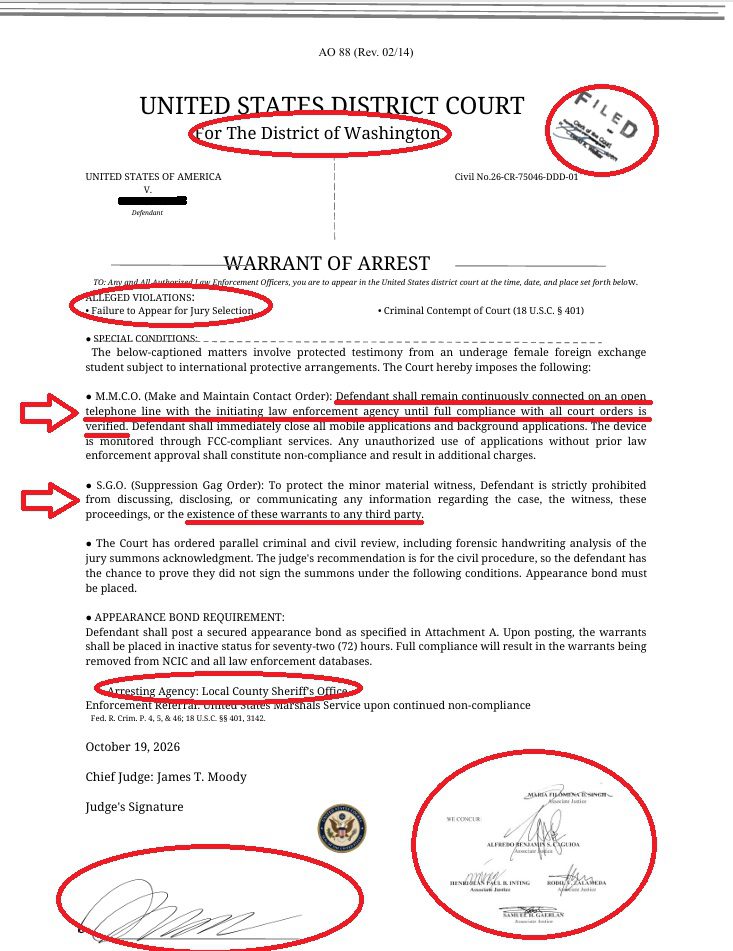
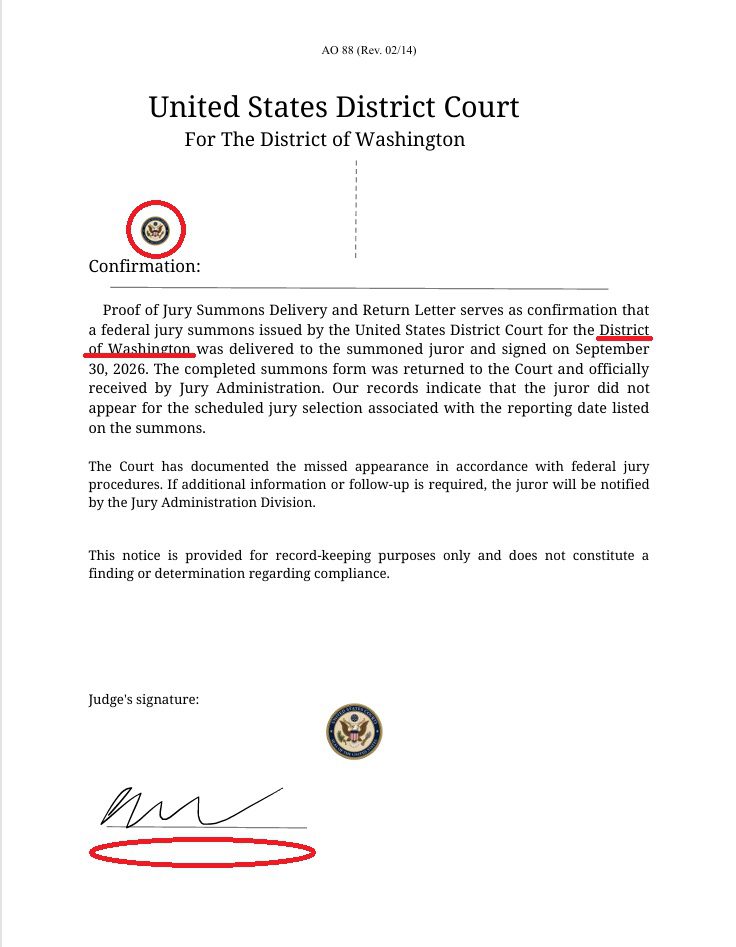
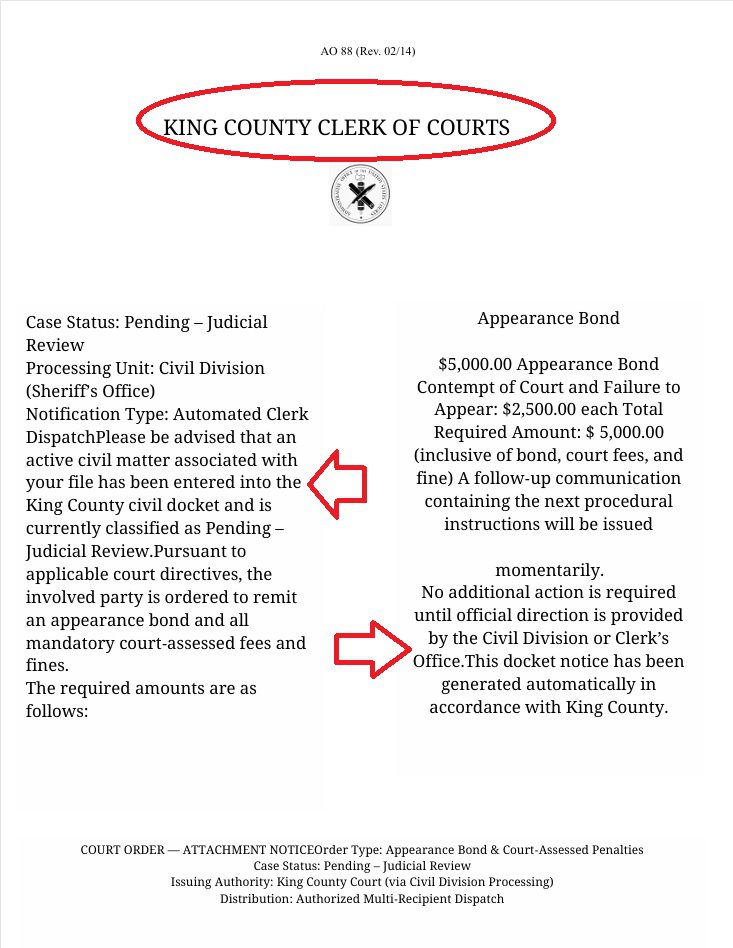
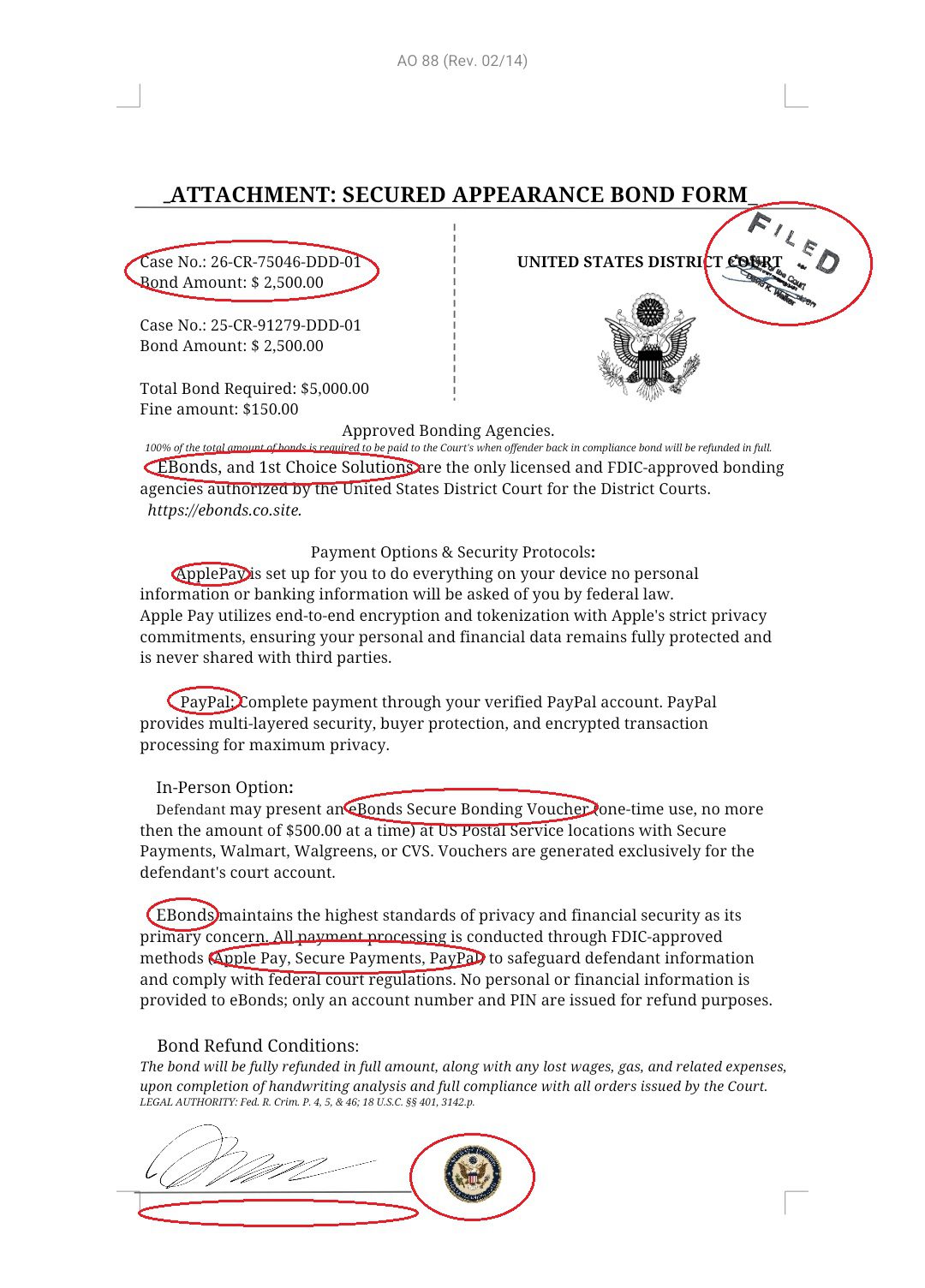
The “deputy” sent the victim two emails showing arrest “warrants.” Although the documents had some copy-cat details, to a trained eye, they were clearly fake.
Below you can see the exact “warrant” documents the suspect sent to the victim. Key details that are inaccurate, oddly placed, or completely false are underlined and circled in red.
The Seattle Police Department wants to prevent people from falling victim to these scams, especially as the holiday season approaches. It’s important to remember that law enforcement agencies and officials will never call, text, or email you and ask for money.
If you have any doubts about the validity of a phone call, text, or email from someone claiming to be a law enforcement official, you can always call 9-1-1 or the non-emergency line and ask to speak to a Seattle Police Department officer about the details. You can also call the court involved and ask about the disposition of a warrant.
If you have been a victim of a similar scam, please know that there are no repercussions for speaking about the details of the so-called “warrant” and there is no shame if you did pay money. The Seattle Police Department has dedicated detectives that work to investigate fraud cases, but the best action is prevention.
We ask that you speak with vulnerable adults and children who may be particularly at risk of falling victim to these scams. These groups include elderly adults, those on government assistance or disability, or non-native English speakers. The use of Artificial Intelligence has made fake documents harder to decipher and people with limited understanding of law enforcement and legal proceedings may have difficulty understanding the terms.
These scams work when scammers prey on the fear of being arrested and the hope that victims don’t feel empowered enough to ask for more details. The Seattle Police Department is committed to transparency, a value that isn’t shared with scammers.
To learn more about resolving a warrant issued by the Seattle Municipal Court, visit this site.