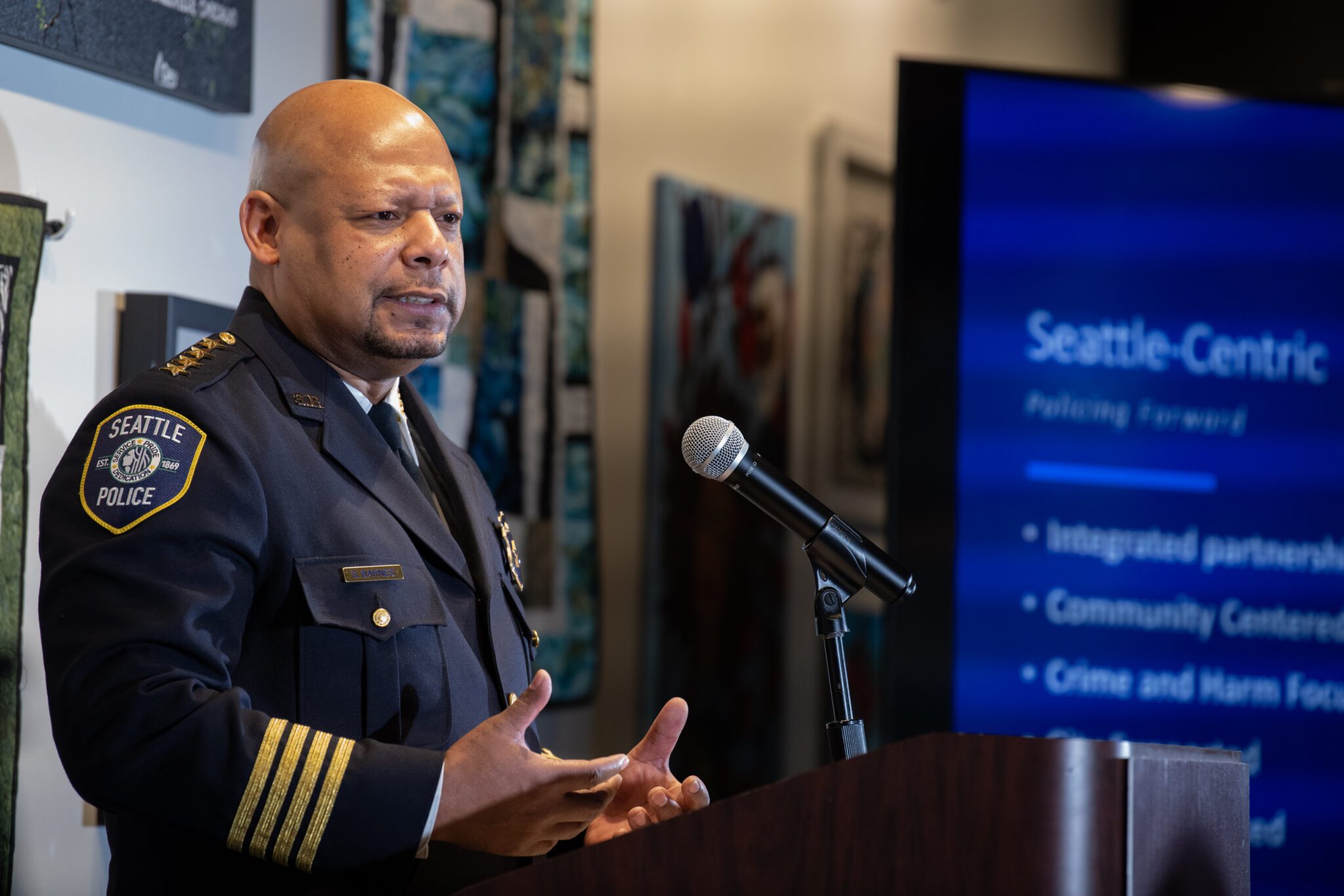
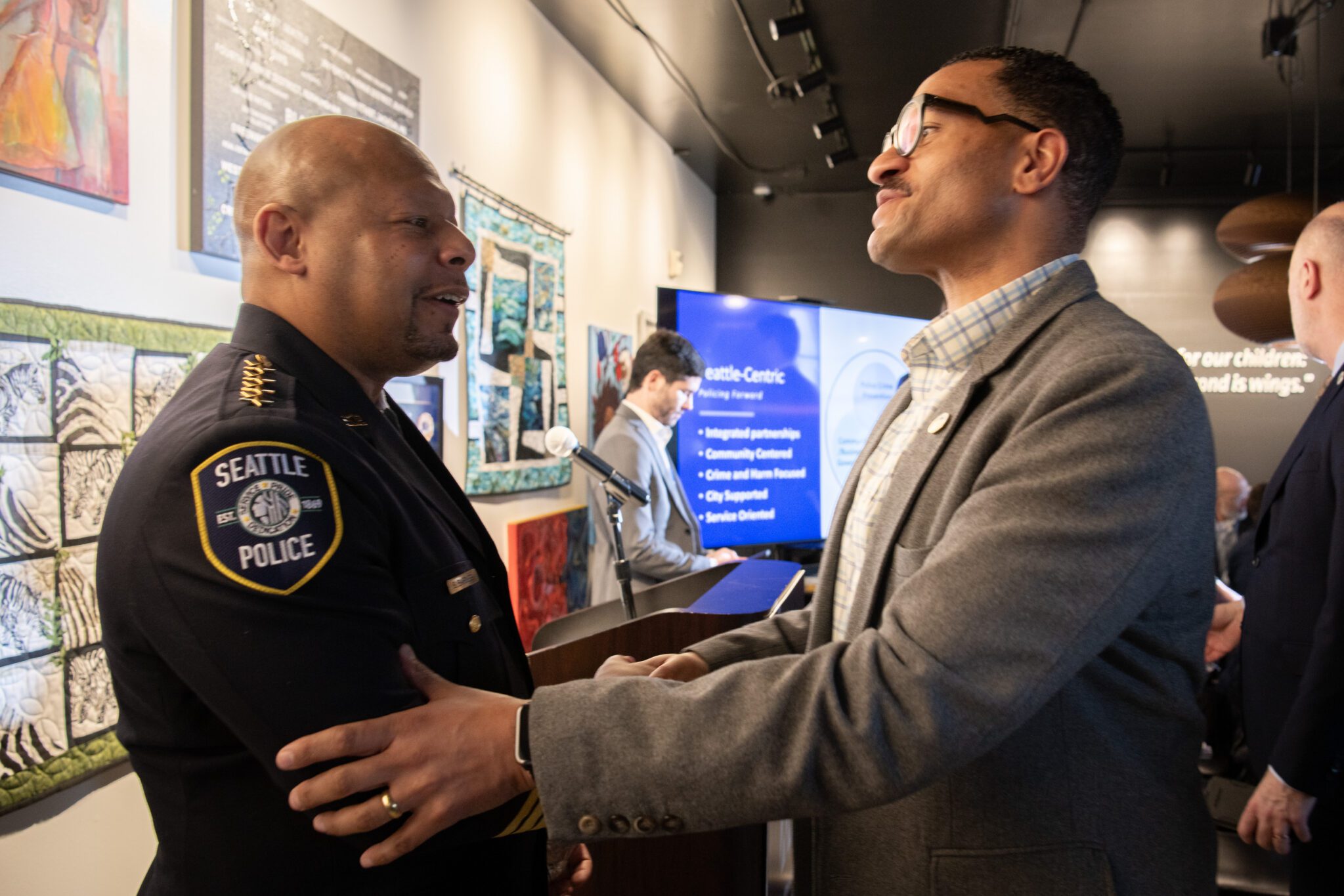
Seattle Police Department Chief Shon Barnes announced that overall crime in Seattle fell 18% in 2025 compared to 2024, with reductions across major categories including the most serious – homicide.
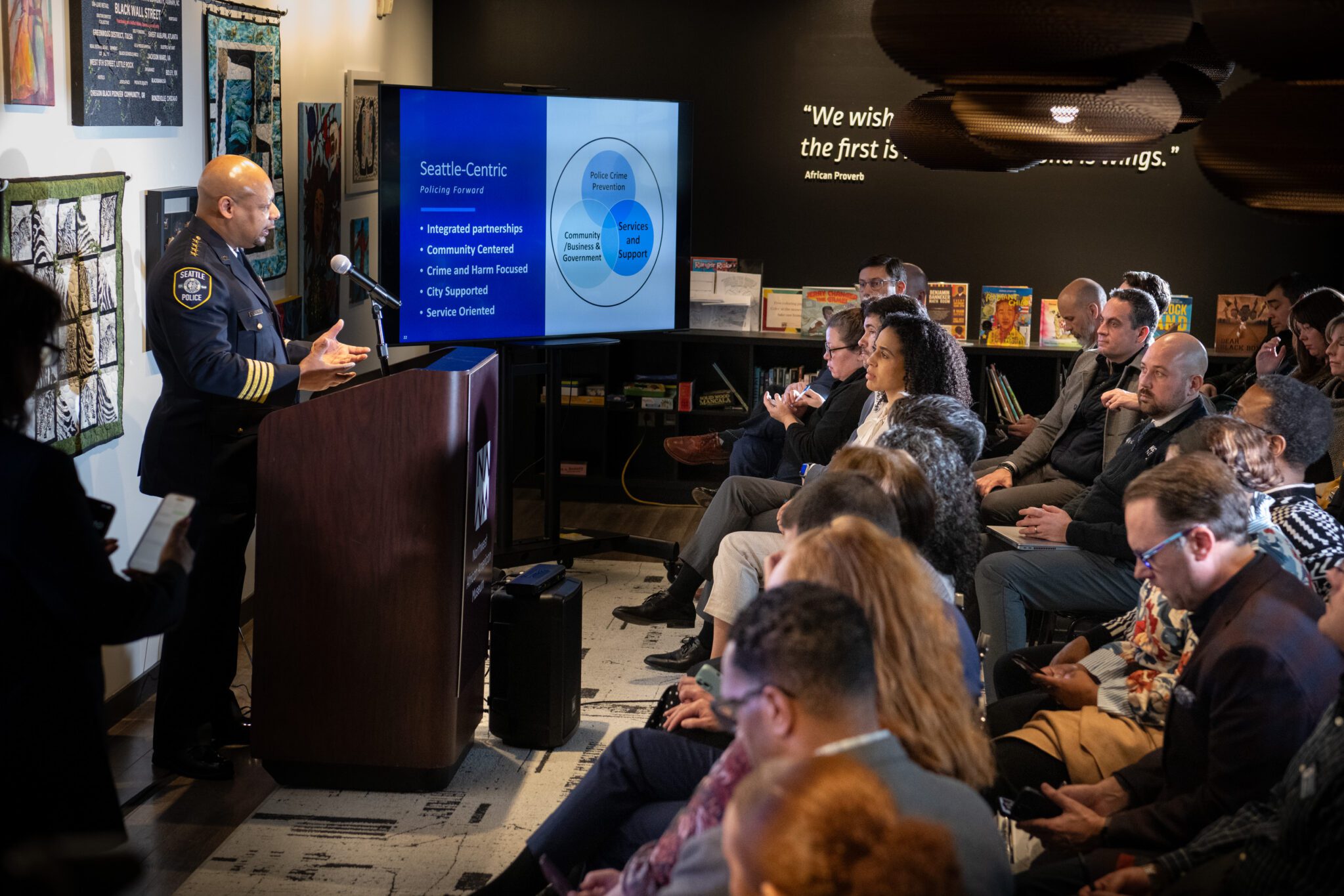
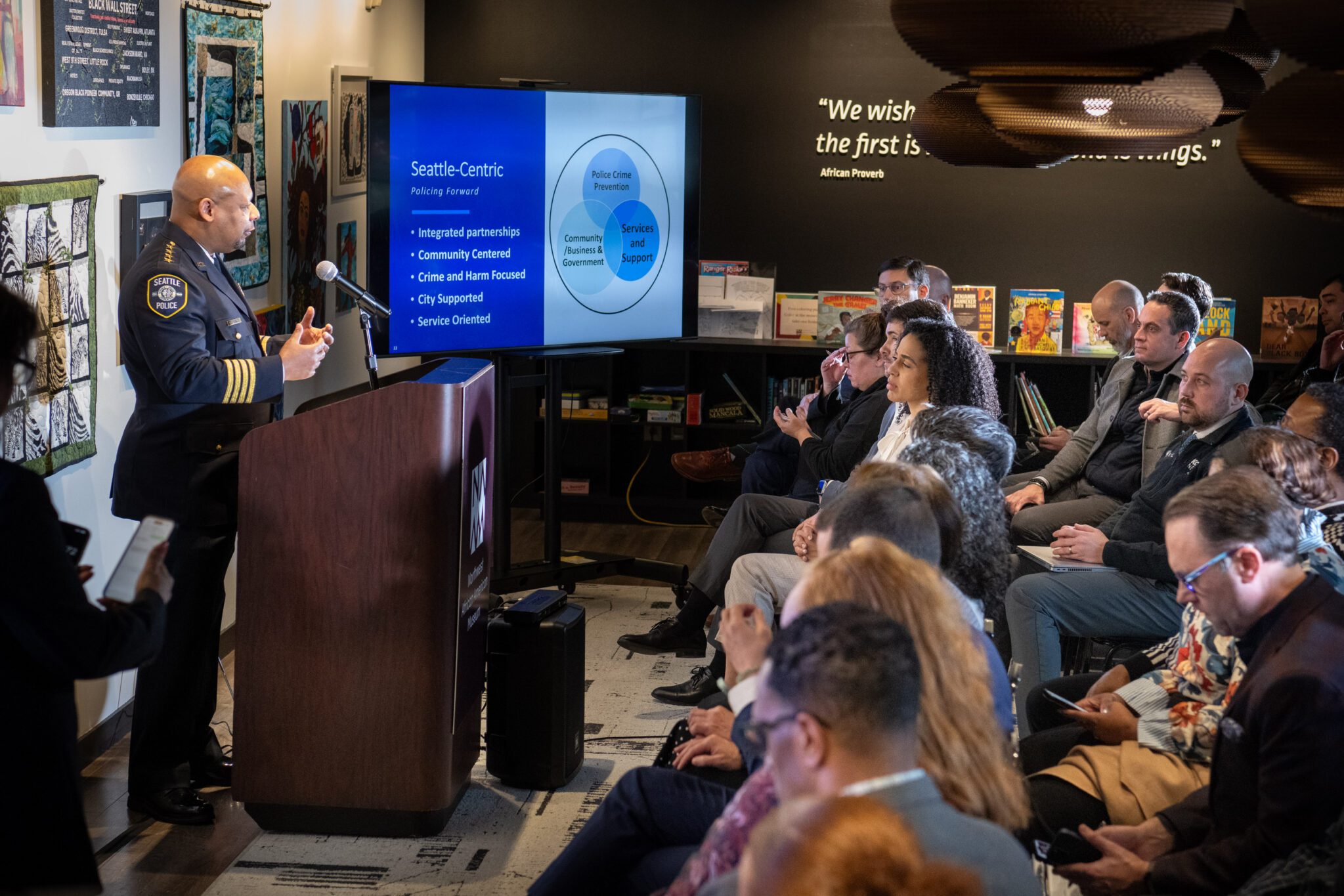
There is still plenty of work to do in 2026 and beyond, Barnes said in a speech at the Northwest African American Museum on Feb. 2, noting that a single year of positive results is just one step in “a long marathon toward making every neighborhood safer.” But, he added, last year’s progress demonstrates that his Seattle-Centric Policing Plan can make Seattle safer if we stay consistent in our approach. The strategy, which takes Seattle’s values into account, involves deepening city engagement to take a “whole of government” approach, deepening community partnerships to foster trust, responsibly using technology, and deploying evidence-based strategies.
Homicides Fell by 36% and SPD Solved More Cases
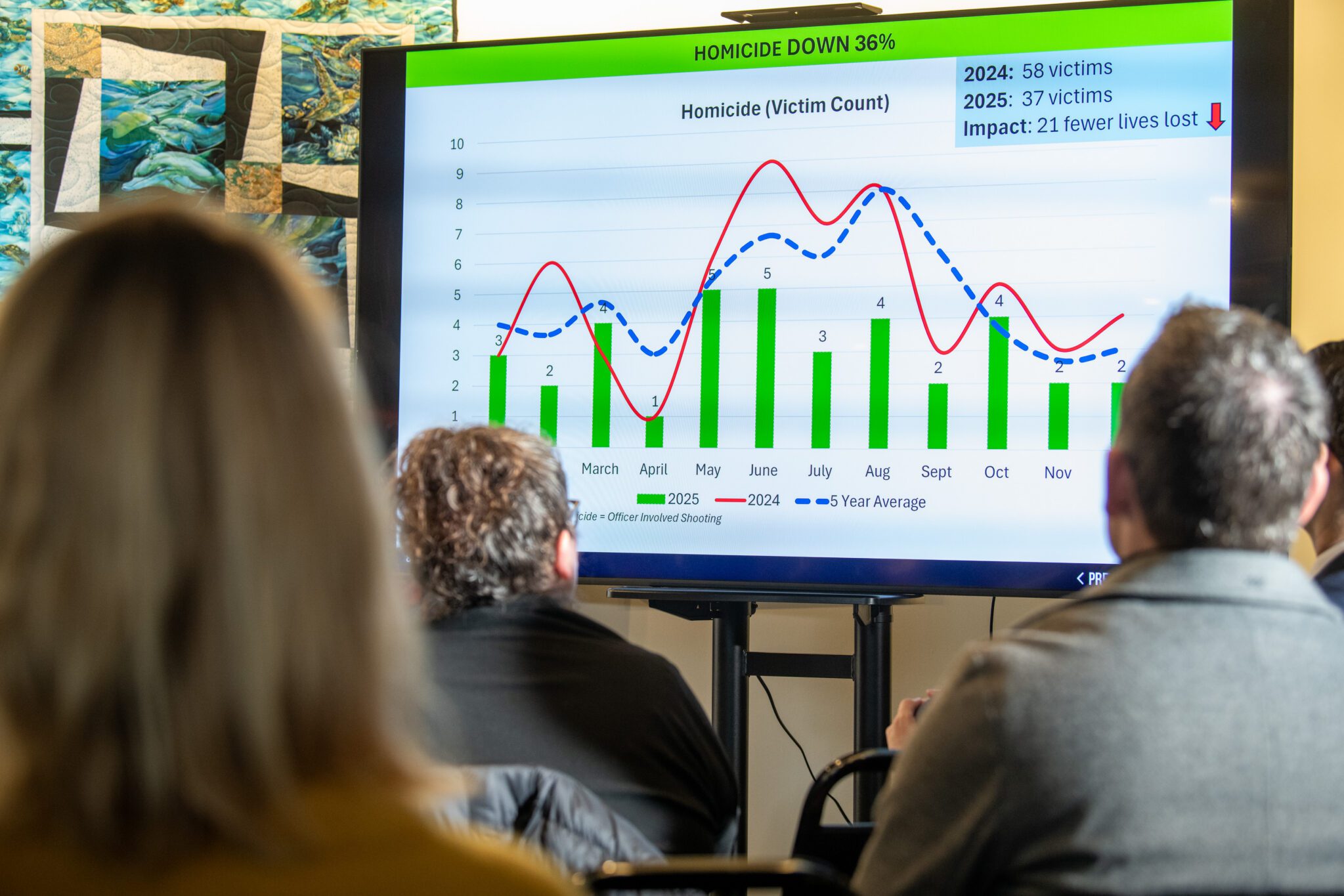
While any loss of life is unacceptable, last year Seattle experienced 37 homicides, which is 36% fewer than the 58 people killed in 2024. That means 21 fewer lives were lost than the previous year, and the number reached the lowest level since before the pandemic over five years ago.
Last year, the department’s sworn and professional staff worked together to solve 86% of the cases. That means SPD brought some measure of closure to 32 of 37 families affected by a tragic homicide.
The 86% clearance rate also represents a dramatic improvement from the department’s 2024 clearance rate of 57%, and it surpasses the 61% national average.
Barnes credits SPD’s clearance rate to deepening collaboration across the Seattle Police Department—patrol officers, crime scene investigators, support staff, detectives, evidence professionals, and crime analysts in SPD’s Real‑Time Crime Center. Even though the RTCC launched in May, RTCC staff assisted in investigating 17 homicide cases – that’s 45% of all cases — and assisted in case closure for 10 of the homicide cases.
He also credits the community, since many homicide cases typically get solved because someone gave detectives a lead, called SPD’s Tip Line, or reported suspicious activity to police.
“Our ability to solve 86% of last year’s homicide cases suggests we are improving in the most important category of all: community trust,” Barnes said.
Gun Violence
About 80% of last year’s homicide victims lost their lives to someone who fired a gun.
But we cannot talk about homicides without addressing gun violence more broadly. In 2025, police saw some positive signs:
- The number of people struck by gunfire decreased by 36%.
- Reports of shots fired—a major driver of fear among our neighbors—fell by 12%, and for the first time in years, we did not see the typical spike during the warm summer months.
While these are encouraging signs that reflect positive momentum in both enforcement and community partnership, Chief Barnes acknowledged the tragic shooting deaths of three people – including two high school students – this past weekend.
“When it comes to preventing future gun violence, I want to stress that we all have a part to play. Our entire community must work together on a consistent, evidence-based solution. Law enforcement must be involved, but this challenge requires a “whole of government and community” approach, which this moment clearly demonstrates,” he said. “We must support one another across all neighborhoods to do what it takes to prevent more senseless gun violence.”
Firearm Recoveries
There are inherent dangers in police work, and while we respect the rights afforded by the Second Amendment, SPD also knows that some people carry weapons illegally or with harmful intent.
Last year, SPD officers lawfully recovered 1,500 firearms—that’s a 74% increase from the previous year.
While more analysis is needed to determine causation, Barnes said that removing firearms from those who should not possess them is directly connected to the reductions we’re seeing in violent crime. At the very least, every firearm SPD’s officers recovered represented one less opportunity for someone in Seattle to become a victim.
Aggravated Assaults
Aggravated assaults in Washington include a wide range of offenses—from punches to shootings. In 2025, we saw an 8% reduction in these incidents.
This means 320 fewer people were injured or assaulted last year than in 2024—almost one fewer victim every day. This is a positive trend.
Stolen Vehicles
Auto theft has challenged cities across the country, and Seattle has been no exception. Stolen vehicles endanger motorists, fuel other crimes, and impose financial and emotional hardships on victims.
In 2025, we reduced stolen vehicles by 24%— 1,821 fewer victims.
This success was driven by strategy. After analyzing trends, we established a threshold: Four vehicles stolen, within a quarter‑mile radius, over 7 days, automatically triggers a crime bulletin, special emphasis patrols, community education, and investigative action.
“As our colleagues in the Fire Department say: Prevent small fires from becoming large fires,” Barnes said.
Car Prowls including Gun Thefts
Car prowls remain a persistent frustration for our neighborhoods. We continue to encourage residents to lock their vehicles and remove valuables—especially jewelry, wallets, purses, and firearms, which are among the most commonly stolen items.
Last year, 206 firearms were stolen from vehicles in Seattle. Chief Barnes encourages gun owners to take steps to prevent this from happening. “Cars make terrible gun safes,” he said.
Even with these challenges, SPD reported a 7% reduction in car prowls in 2025.
Burglaries
Few crimes create fear and lasting trauma like burglary. Whether it’s a business or a home, the violation feels deeply personal.
In 2025, burglaries decreased by 18%, which means that 1,571 fewer people who experienced the feeling of being violated. This is a major win for our city.
What to Expect in 2026
Our work is far from finished. Chief Barnes shared an overview of what to expect in 2026 that includes:
- Continuing our new, monthly community conversation series called Our City, Our Safety. The next one will be held on Feb. 10 at 6 PM at the Loyal Heights Community Center
- Expanding SPD’s new Neighborhood Resource Officer Programs, which puts more officers in your local neighborhoods, to 3rd and James as well as 12th and Jackson
- Using evidence-based community violence intervention (CVI) to break cycles of harm.
- Accelerating retention and recruitment efforts to continue our record-breaking hiring surge to keep more officers on your streets.
- Working to improve response times because it can save lives and interrupt crimes.
- Preparing for the FIFA World Cup games to ensure a safe and enjoyable experience for everyone.